Research
IVR Dosimetry
Dosimeter for Analyzing the Incident Angle of X-rays
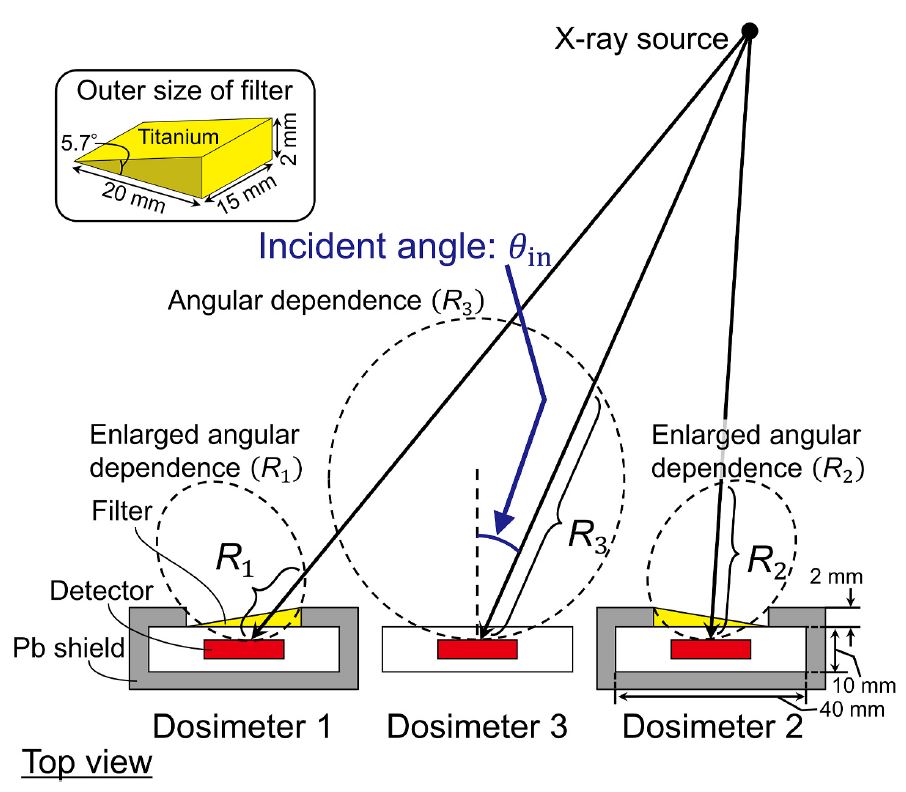
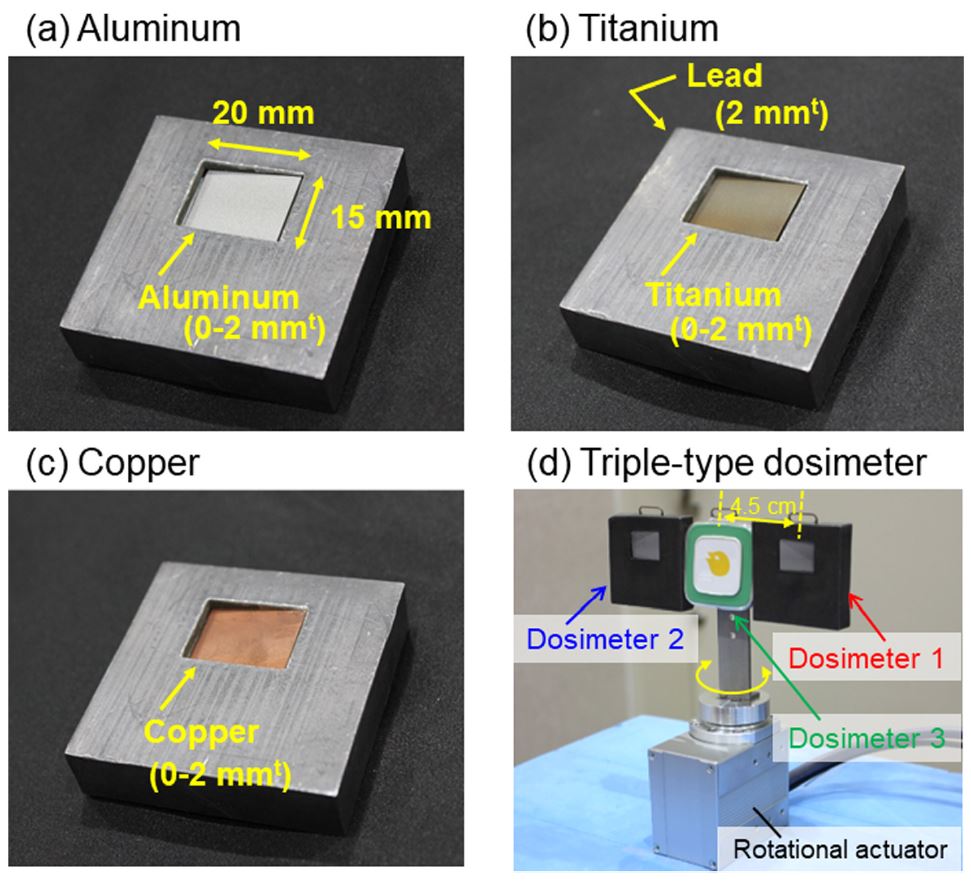
For radiation detectors, the fact that measured doses vary depending on the incident angle of X-rays—called angular dependence—is usually considered a problem to be minimized. In our research, however, we took the opposite approach. We intentionally enlarged angular dependence of the detector in order to develop a dosimeter capable of determining the incident angle of X-rays.
In interventional radiology (IVR), operators are exposed to scattered X-rays. We hope that information on incident angles obtained with this type of dosimeter can provide as an educational tool to help reduce occupational exposure of physicians during diagnostic radiology procedures (X-ray fluoroscopy).
Related Papers:
A wearable active-type X-ray dosimeter having novel functions to derive both incident direction and absolute exposure dose
Takashi ASAHARA, Hiroshi HAYASHI, Tatsuya MAEDA, Sota GOTO, Daiki KOBAYASHI, Rina NISHIGAMI, Cheonghae LEE, Miku ANDO, Yuki KANAZAWA, Seiichi MURAKAMI.
Radiation Physics and Chemistry, 208, 110932(11 pages), 2023.
DOI:10.1016/j.radphyschem.2023.110932
Evaluation of lower detection limit and performance analyses related to the incident angle of X-rays and absolute dose using a triple-type dosimeter
Takashi ASAHARA, Hiroaki HAYASHI, Tatsuya MAEDA, Daiki KOBAYASHI, Rina NISHIGAMI, Sota Goto, Miku ANDO, Natsumi Kimoto, Yuki KANAZAWA, Kazuta YAMASHITA.
Radiation Measurements, 175, 107148(9 pages), 2024.
DOI:10.1016/j.radmeas.2024.107148
Dosimeter for Analyzing a Wide Angle Range of Incident Directions
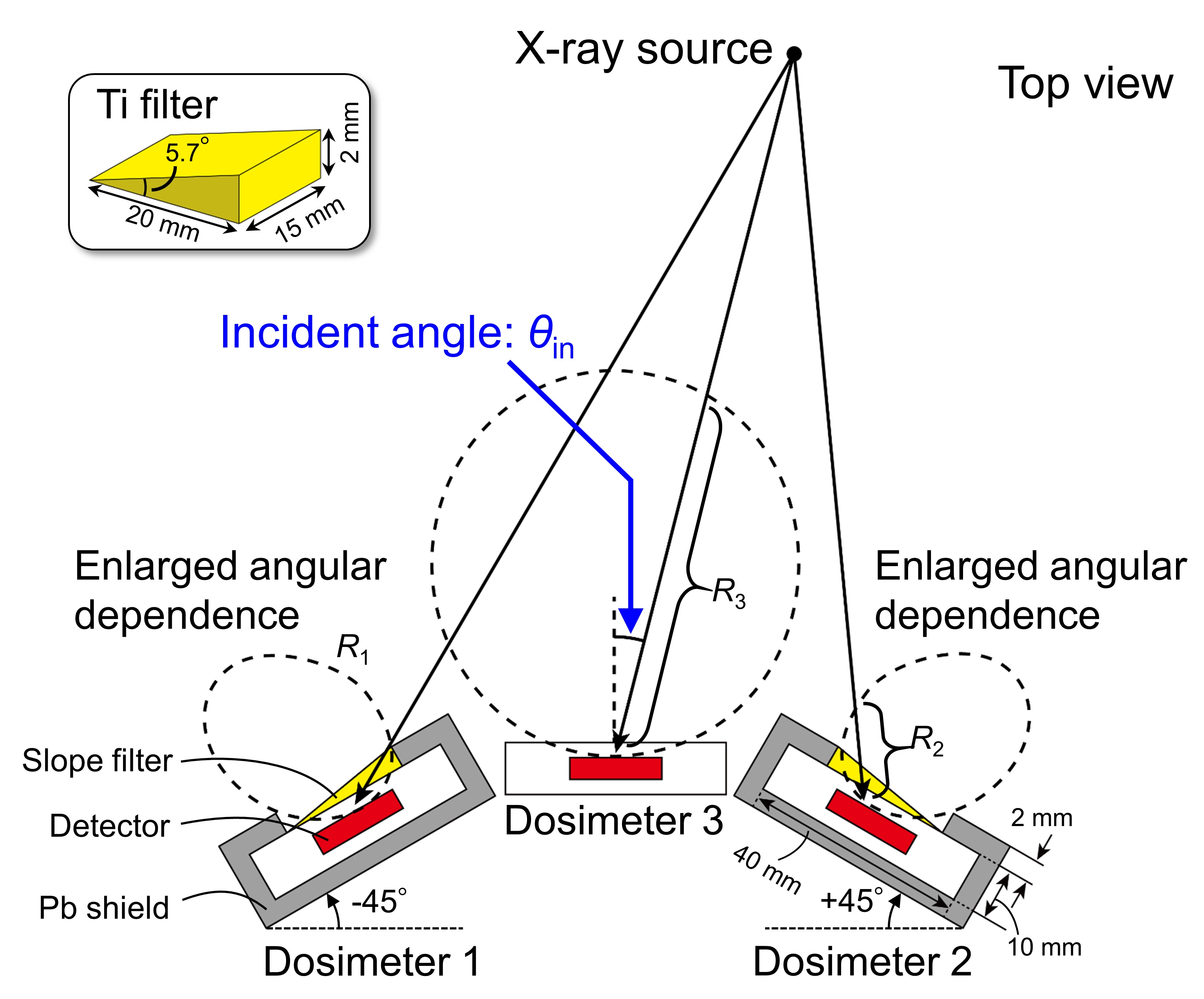
The dosimeter for analyzing the incident angle was improved to enable measurements over a wide range of incident directions.
Related Paper:
A novel wearable dosimeter system that can analyze the incident direction of X-rays for medical dosimetry – Improvements to the detector arrangements and analysis algorithm –
Takashi ASAHARA, Rina NISHIGAMI, Daiki KOBAYASHI, Natsumi KIMOTO, Sota GOTO, Kazuki TAKEGAMI, Rin ISHII, Mana MITANI, Mitsugi HONDA, Toshihiro IGUCHI, Hiroaki HAYASHI.
Radiation Measurements 191, 107592, 2026.
DOI:10.1016/j.radmeas.2025.107592
Photon counting CT
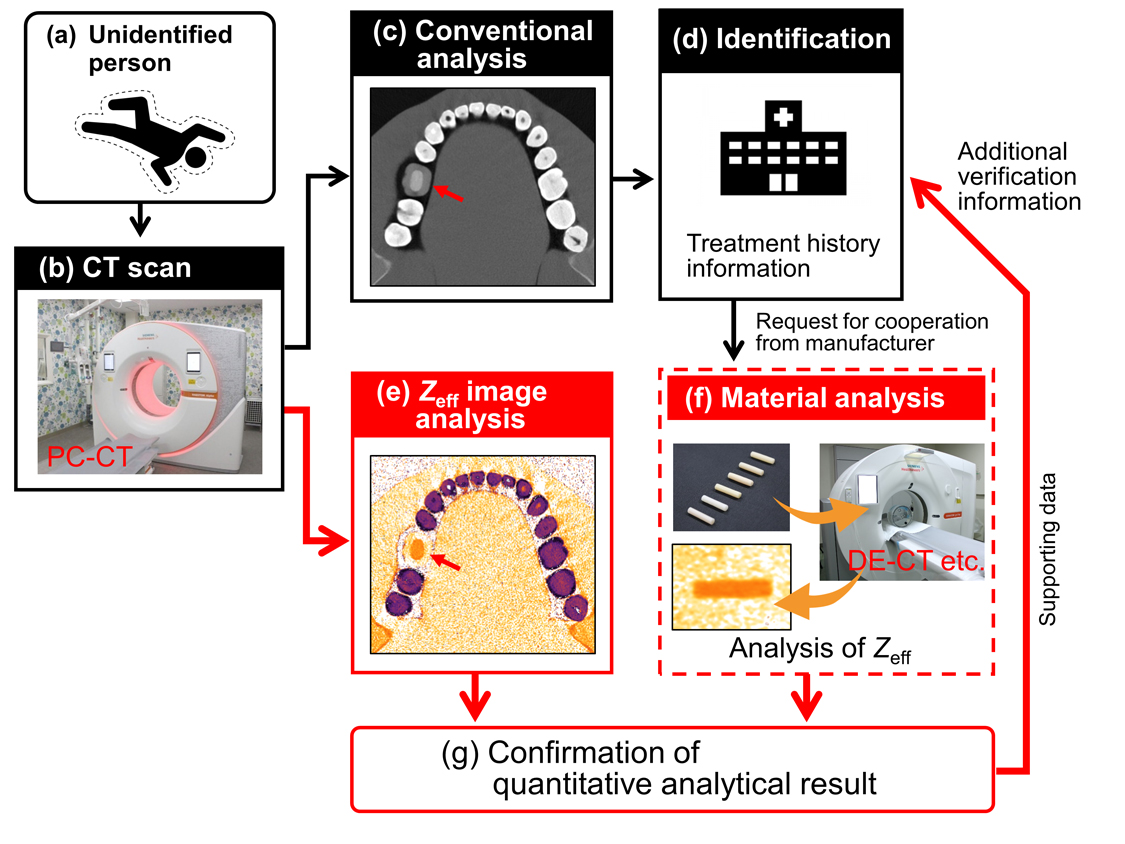
Identification of Dental Materials Using Effective Atomic Number Image
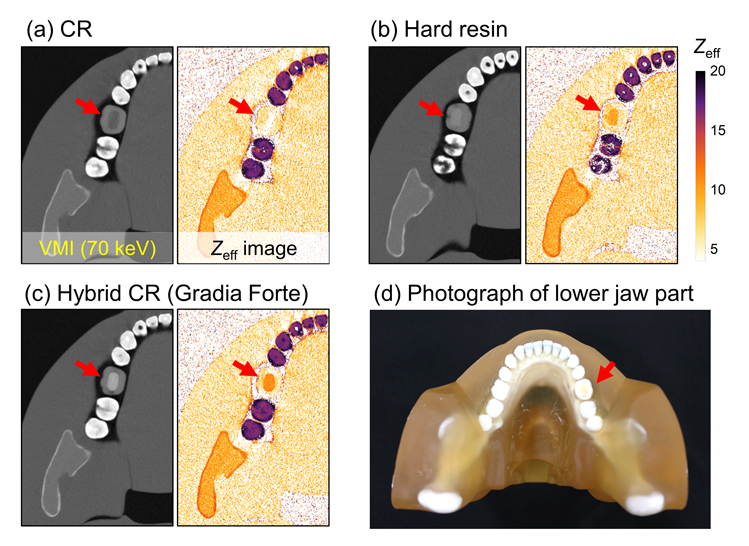
We are conducting research using the latest clinical photon-counting CT scanner. To explore the clinical application of effective atomic number imaging, a type of quantitative imaging, we proposed a novel method for personal identification in the field of forensic odontology. In this study, we also developed a new analytical algorithm to generate effective atomic number images.
Related Paper:
Helpfulness of effective atomic number image in forensic dental identification: photon-counting computed tomography is suitable
Takashi ASAHARA, Shunsuke OKADA, Hiroaki HAYASHI, Tatsuya MAEDA, Rina NISHIGAMI, Daiki KOBAYASHI, Chihiro KUROSE, Natsumi KIMOTO, Sota GOTO, Miki HISATOMI, Yoshinobu YANAGI, Toshihiro IGUCHI.
Computers in Biology and Medicine, 184, 109333, 2025.
DOI:10.1016/j.compbiomed.2024.109333
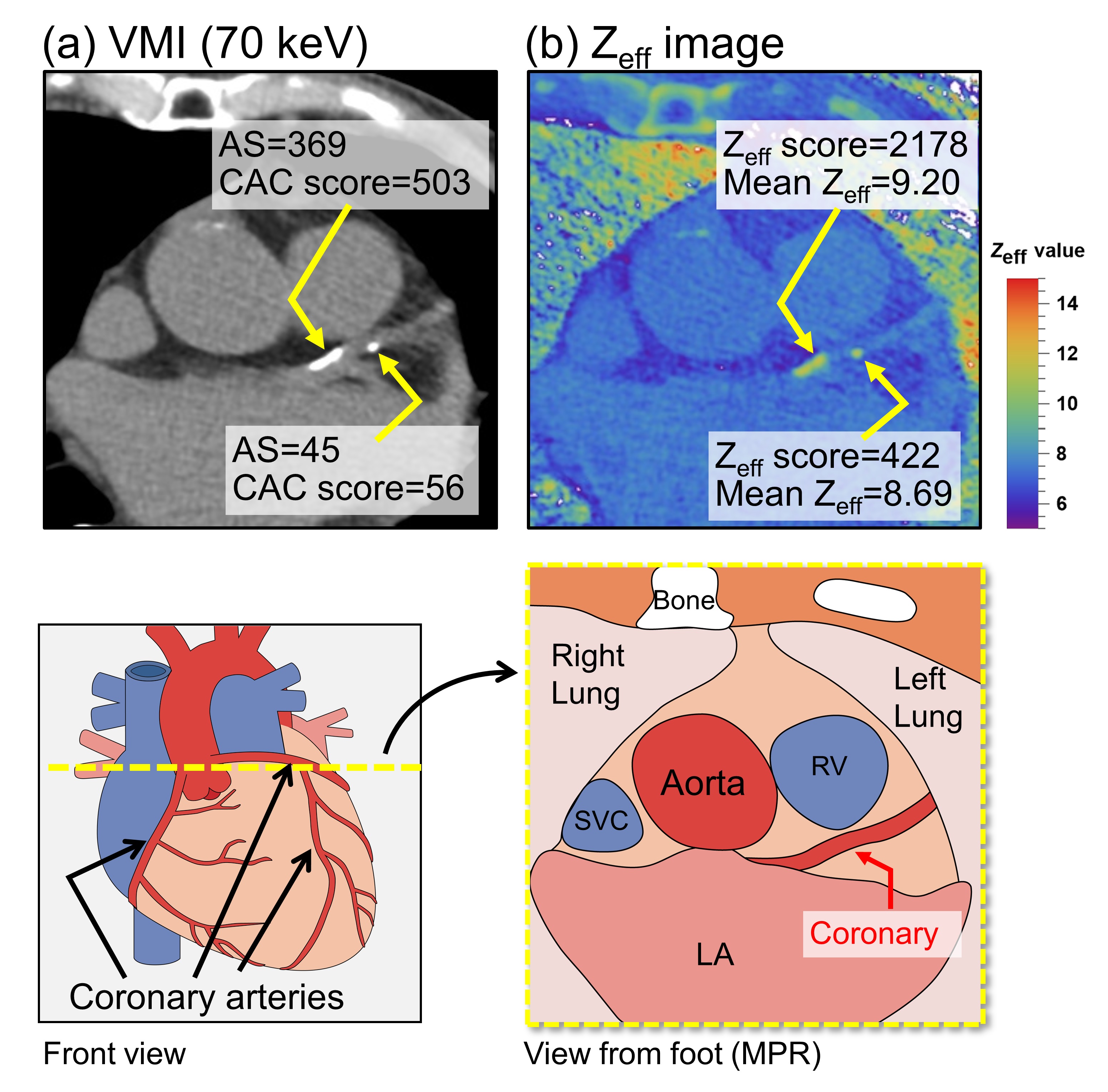
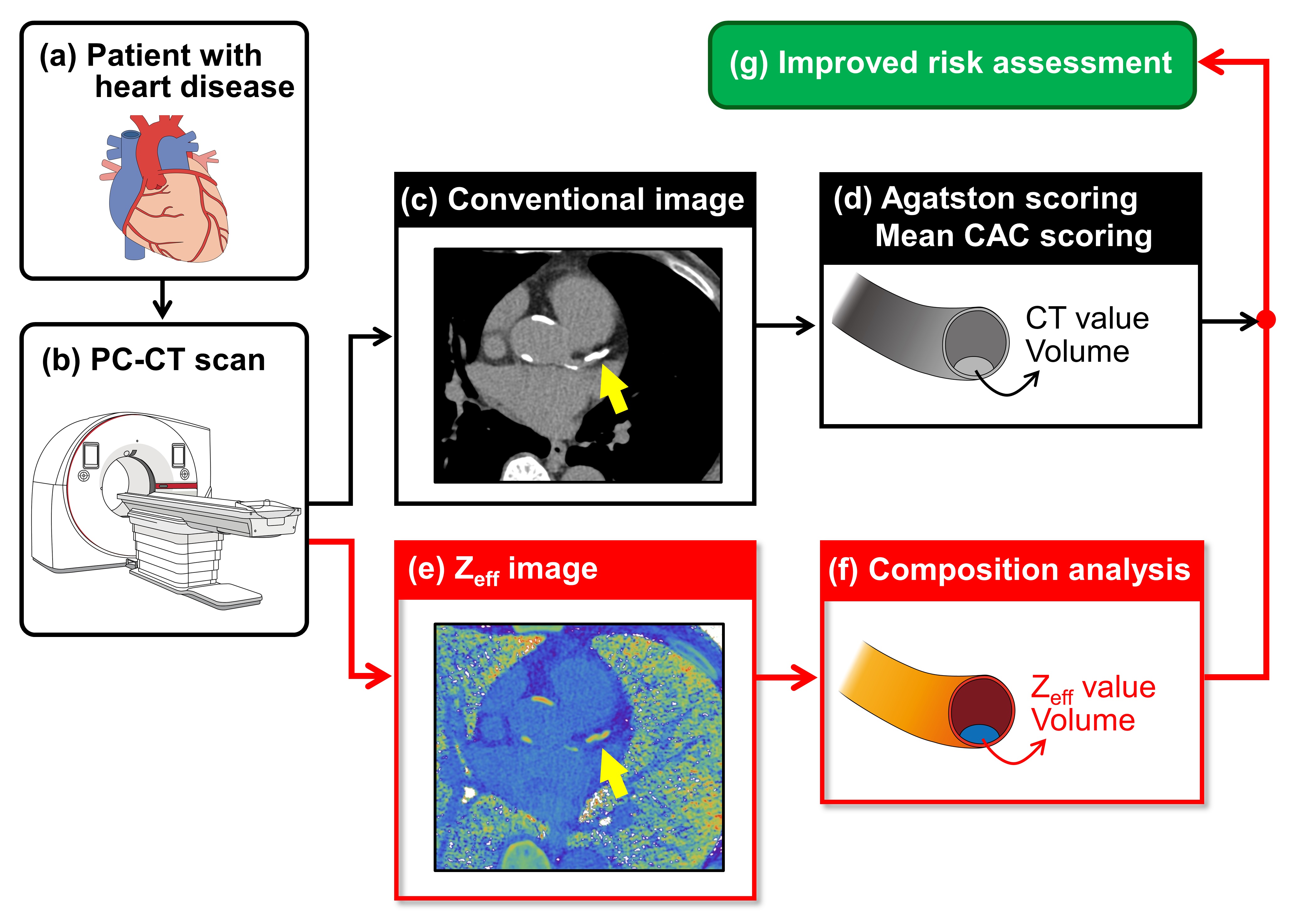
Analysis of Coronary Artery Plaques Using Quantitative Imaging
The effective atomic number image generated by the proposed method was applied to the scoring of calcified plaques in the coronary arteries. Our results suggest the potential for more quantitative risk assessment.
Related Paper:
Applicability of effective atomic number (Zeff) image analysis of coronary plaques measured with photon counting computed tomography
Takashi ASAHARA, Mana MITANI, Natsumi KIMOTO, Rina NISHIGAMI, Kazuki TAKEGAMI, Yusuke MORIMITSU, Noriaki AKAGI, Toru MIYOSHI, Yuki KANAZAWA, Toshihiro IGUCHI, Hiroaki HAYASHI.
Investigative Radiology, 61(6), 378-386, 2026.
DOI:10.1097/rli.0000000000001237