>Part 2: Construction of future prediction model and scenario evaluation using material flow analysis (MFA) method
[1] Optimization evaluation of plastic resource circulation system towards achieving carbon neutrality
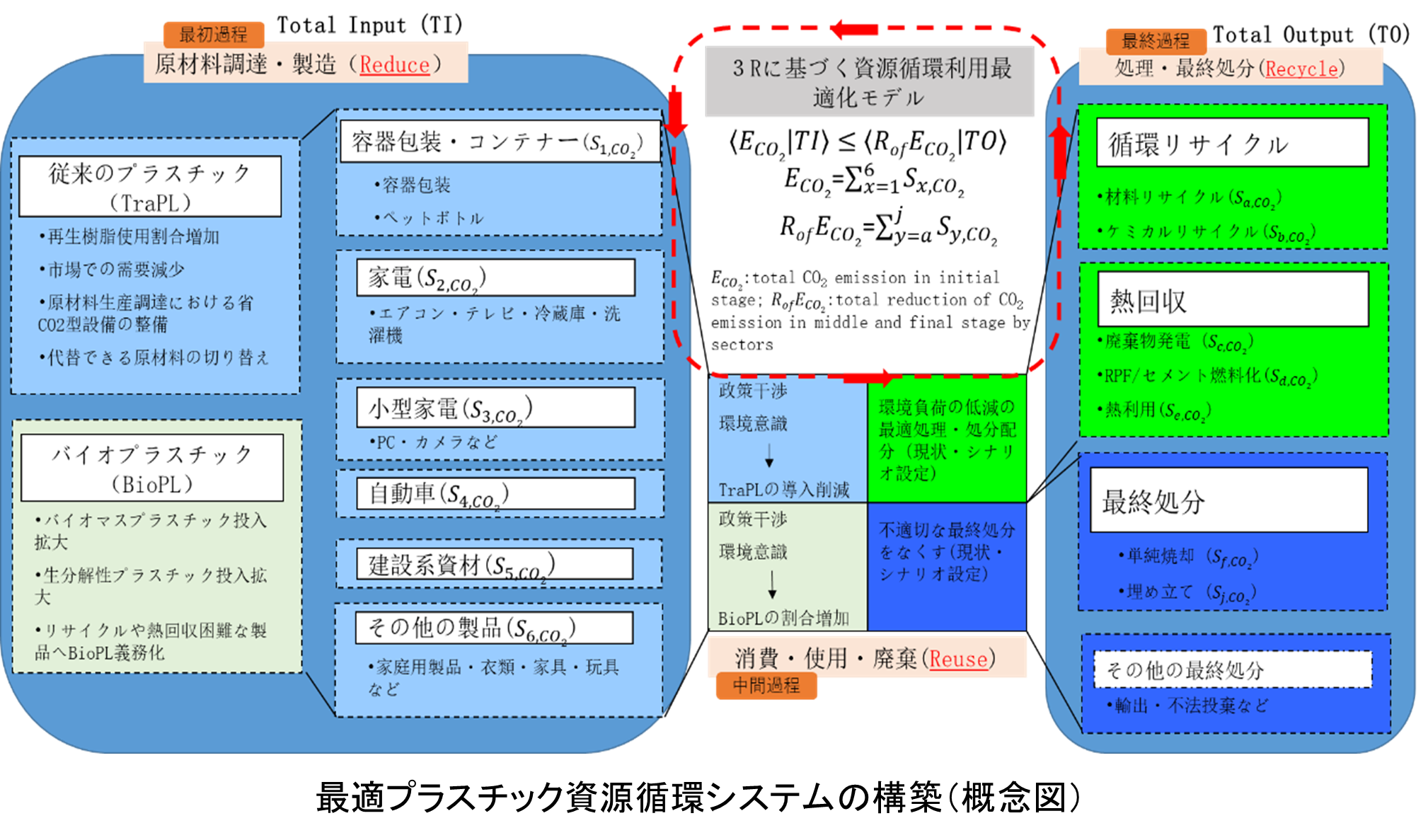
This research aims to establish an optimal plastic resource circulation system in Japan. As shown in Figure 4, we aim to reduce TraPL-derived CO2 emissions at the entry point by reducing the use of conventional plastics (TraPL) and increasing the input of bioplastics (BioPL) during raw material procurement and manufacturing (initial process). In the stages of consumption, use, and disposal (intermediate processes), use cycles and reuse rates can be increased through changes in consumption behavior due to policy intervention and changes in environmental awareness. In the final treatment and disposal (final process), optimal recycling and heat recovery are performed for each type of used plastic resources to replace them with new ones at the outlet, contributing to the reduction of CO2 emissions derived from TraPL. By recycling plastic resources based on the 3Rs, we aim to achieve carbon neutrality by reducing CO2 emissions in the intermediate and final processes closer to the CO2 emissions in the initial process. Through the academic dissemination of this research, we will contribute to the creation of a recycling-oriented society and a low-carbon society in which the consumption of natural resources is suppressed and the burden on the environment is reduced as much as possible by suppressing the generation of plastic waste and appropriately cyclical use and disposal. Furthermore, contribute to achieving the Sustainable Development Goals (SDGs). It is hoped that scientific knowledge linked to social change, behavior change, and decision-making will be presented to policy makers, business owners, consumers, and others, and discussions will take place together.