Here, we use an environmental sociological approach (interviews, questionnaire surveys, etc.), statistical analysis (Excel, SPSS), and model construction to present scientific knowledge linked to social change, behavior change, and decision-making to policy makers, managers, and consumers. Examples of research are shown below.
[1] Research on the driving force for promoting corporate environmentally friendly behavior
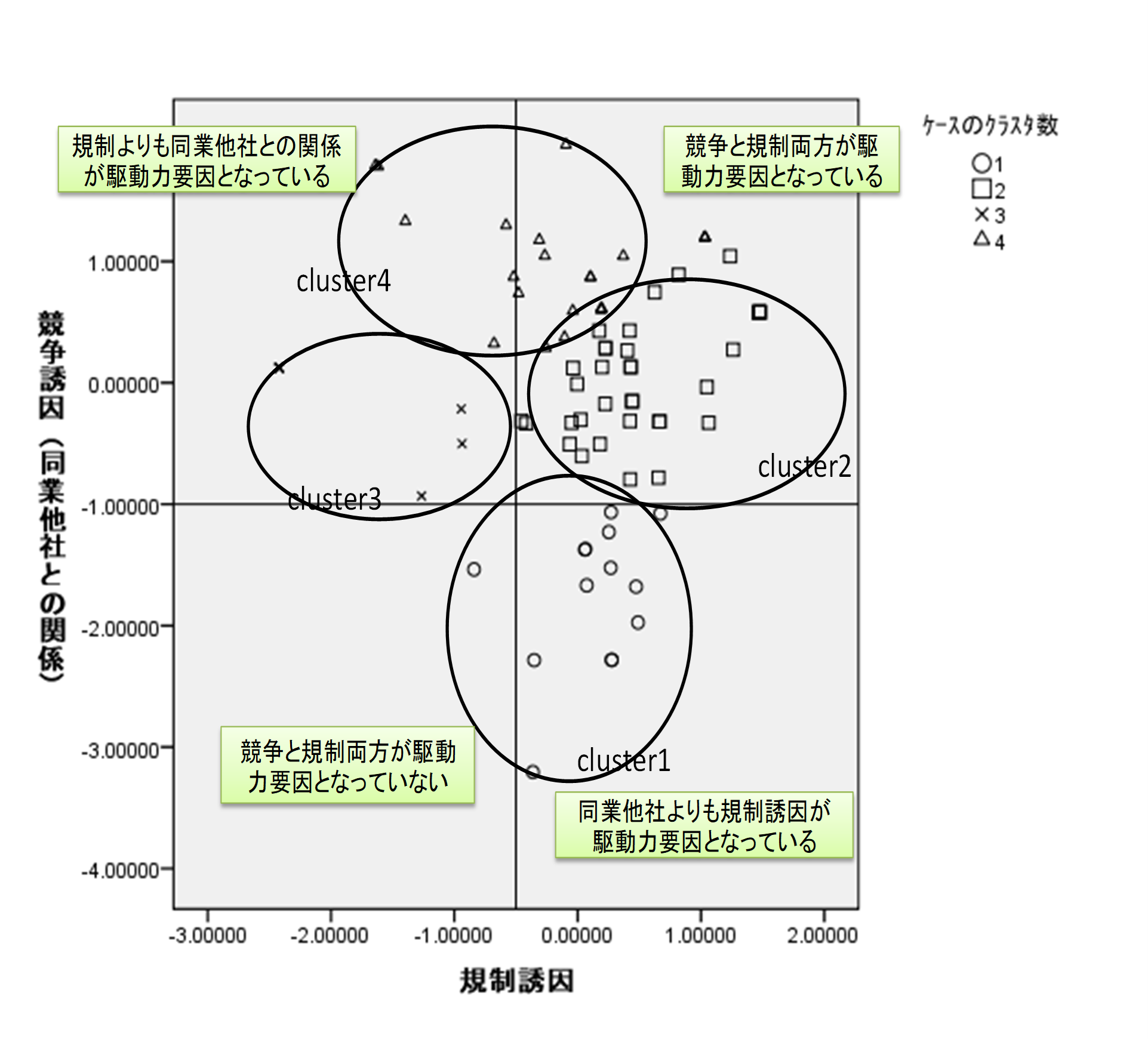
The role of companies in efforts to solve environmental problems is expected to become increasingly important in the future. The purpose of this research was to understand the current state of environmentally friendly behavior by Chinese companies and identify effective driving forces for further promotion. In order to understand the characteristics of Chinese companies, we also studied the environmentally conscious behavior of Japanese companies, which are pioneers in environmentally conscious behavior, and compared the results of the two countries. The information obtained through the literature review and interview survey, including questionnaires, will be the main objects of analysis. Target companies are in the electrical and electronic equipment industry. Interview surveys were conducted from 2010-04 to 2010-06 with seven Japanese companies (including one expert) and seven Chinese companies (including four experts). We used QDA (Qualitative Data Analysis) software to analyze the data, and compared the environmentally friendly behavior and driving forces of Japanese and Chinese electrical and electronic equipment companies. Furthermore, assuming that specific environmentally conscious behaviors are influenced by specific driving forces, statistical analysis was performed using principal component analysis and cluster analysis. As a result, regarding the driving forces that define the environmentally conscious behavior of Chinese companies, it was found that, like Japanese companies, many companies as a whole are most influenced by ``competition with other companies in the same industry'' and ``domestic and foreign regulations'' (right figure, Source: Harfui, Yasuko Kameyama, Seiji Hashimoto, Yuichi Moriguchi, Abstracts of the 6th Japan LCA Society Research Presentation, 130-131 (2011)).
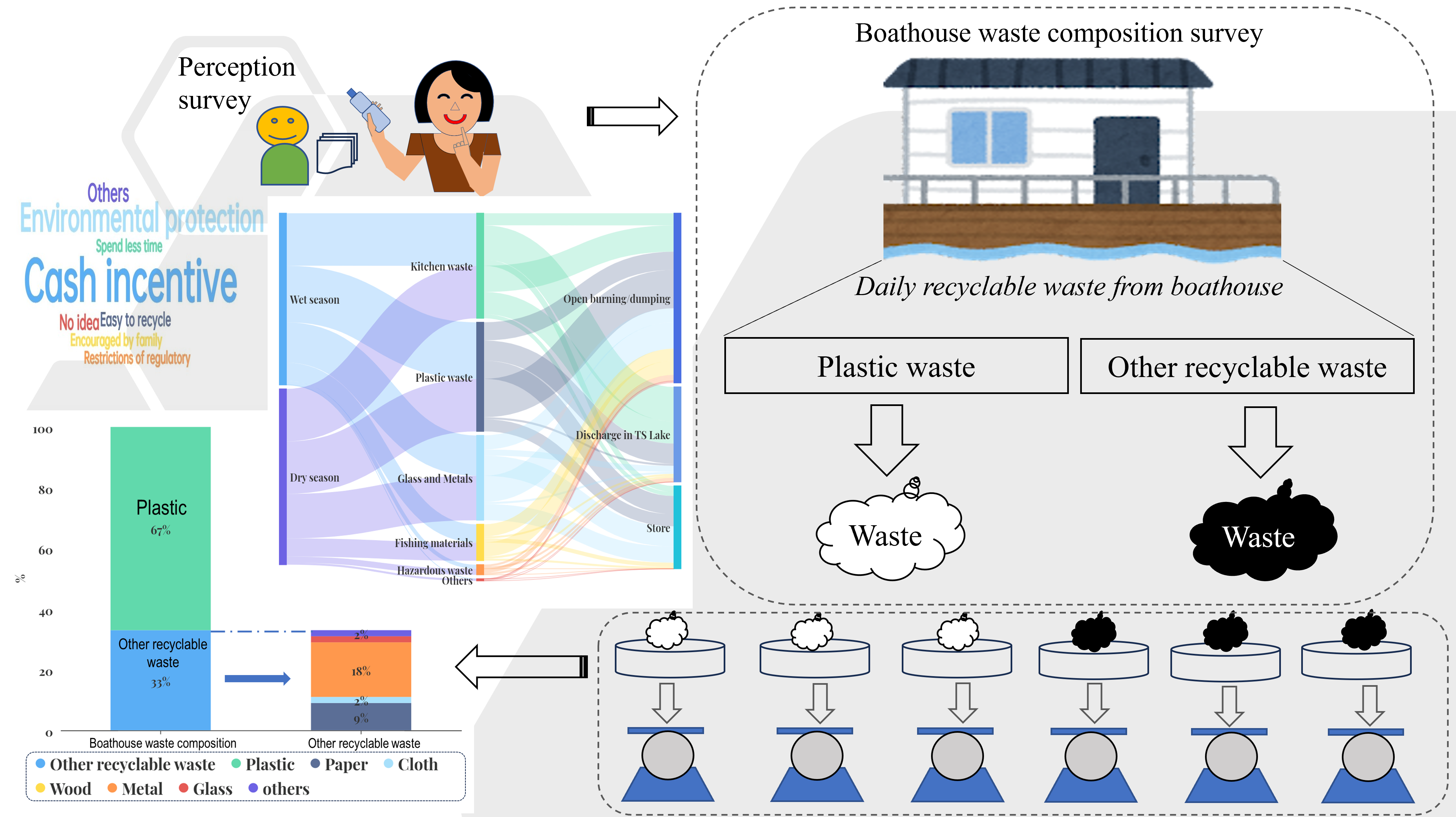
[2] Research on plastic waste separation behavior of floating village residents in Tonle Sap Lake, Kingdom of Cambodia
In areas where there is no garbage collection service and where used plastics
tend to become marine plastic waste, it is necessary to build a plastic
waste separation and collection system with resident participation. In
this study, we conducted interviews (including questionnaires) with multiple
households in the floating village of Tonle Sap Lake in the Kingdom of
Cambodia to clarify their knowledge of plastic products, their awareness
of environmental pollution, and their willingness to cooperate with separate
collection. Furthermore, the type and amount of plastic waste discarded
by households in floating villages was clarified through a waste composition
analysis survey. As a result, it was found that the estimated amount of
plastic waste per house was 180.91g per day, and that each resident of
the water village produced 40.21g of plastic waste per day. Although this
is very low compared to the averages for the US, China, and Cambodia (340g,
120g, and 70g per person per day, respectively), it is higher than India's
10g per person per day.